Architecture & how it works
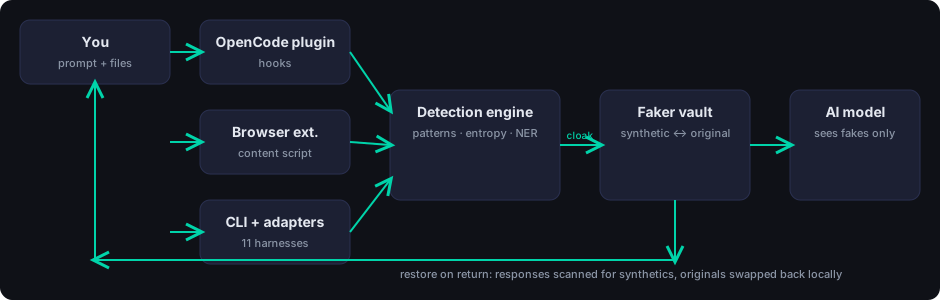
The loop in 30 seconds
- You type or paste something containing secrets into an AI surface — an OpenCode prompt, a browser chat box, a terminal agent.
- The surface adapter intercepts the text before it leaves your machine (OpenCode hook, content-script rewrite, CLI pipe, harness hook).
- The detection engine runs two passes: a compiled regex registry (~40 patterns: API keys, JWTs, PEMs, env vars, DSNs, emails, phones, IPs) with longest-match de-overlap, then a Shannon-entropy sweep for unknown random tokens. The opt-in NER layer adds names, addresses and gated DOB.
- The Faker vault substitutes every hit with a structurally identical synthetic (same shape, same meaning, zero real data) and remembers the bidirectional mapping. The same original always maps to the same synthetic within a session.
- The AI model reasons over realistic fakes and never sees your data.
- On return, responses are scanned for known synthetics and the originals are swapped back — locally, before you read them.
Why fakes instead of [REDACTED]
Opaque tokens break the model's reasoning ("my DB URL is [X], why
timeout?" gives it nothing to work with). A structurally real synthetic
lets it reason about host, port, format and validity exactly as with the
real value. Synthetic secrets carry a SYNTH infix: valid shape, invalid
auth — identifiable in logs, useless to attackers.
What it does NOT do
- Cannot stop a shell command (
curl,aws) exfiltrating secrets out-of-band. - Cannot protect against a compromised provider, plugin, or machine.
- Your local session files still contain what you typed — the boundary guarded is provider-bound traffic, not your disk.
- Weak human passwords (
ramesh@123) are indistinguishable from ordinary words — no detector catches those without drowning you in false positives. High-entropy and patterned secrets are the target.
See the privacy policy for data handling, and packages for what's inside each surface.